
The number is already closed
A negative PNL is the sum of positions that already closed. The market coming back does not touch it — only new trades on the same account move the figure.
Unwind the minus, do not bury it
We take a MEXC account carrying a negative futures PNL and work the loss off on one agreed strategy. Accounts from −$300, the review costs nothing.
Screenshot sent by a chat member. Result of a single account, not a promise of returns. Futures trading carries the risk of losing funds.
We work with MEXC accounts sitting on a negative futures result. The account is reviewed first, the order of work is fixed in the chat before the first trade, and the result of a cycle is split the way we agreed.
A negative PNL is the sum of positions that already closed. The market coming back does not touch it — only new trades on the same account move the figure.

After a heavy drawdown people stop opening the terminal. The account idles for months, and an idle account has no path back to zero.

Sizing up to win it all back at once is the most common way a fixable drawdown becomes a permanent one.
Four steps between the first message and the split. Nothing hidden in between.
Say how many MEXC accounts you hold, roughly how deep the negative PNL is on each and how long it has been sitting untouched.
We break the loss down: how much came from trades, how much from fees, what limits the account carries. Then we say whether a scenario exists at all.
Before the start we agree the order of work, the rough length of a cycle and what counts as a result. After that nothing gets renegotiated.
The account trades the agreed strategy. The cycle closes with a written summary, the result is split, and the next cycle is your call.
Not one lucky entry — a sequence of work on the account.
Before anything runs we reconcile the real negative PNL against the figure you named and check what the account can actually do.
The body of the cycle. One scenario, chosen in advance, held to the end — no switching halfway and no improvisation after a bad day.

The cycle closes with the entry state and the exit state written down. The share is calculated from the difference between them.

The difference shows up in what happens to the negative PNL, not in promises.
The split is fixed on entry. Volume and timeframe change between the options, the share does not.
The usual entry point: a single MEXC account in the red.
When the loss is spread over several accounts.
For people holding client or partner accounts.
Notes from members about how the work runs — not about returns.
They told me which scenario was realistic instead of quoting a percentage. The account had been dead since spring.

Two accounts, costed separately, launched in a queue. One combined summary at the end saved a lot of messaging.

On the smaller account they said plainly there was nothing worth running. That is when I started trusting the rest.

The ones that come up first in the chat.
Describe the situation in the chat and you will get a scenario instead of a pitch.
Open the Telegram chatWhat a negative futures PNL actually is, why an account carrying one still has value, how a cycle of work runs and how the terms get fixed before it starts.
PNL — profit and loss — is the combined result of an account. When a run of positions closes worse than it opened, the total drops below zero and the account carries a negative PNL. On MEXC it sits in the account statistics and stays there until new trades move it.
The figure blocks nothing by itself. Nobody stops you trading an account in the red. The real damage is behavioural: the owner stops using the account, the loss sits, and occasional attempts to claw it back usually make it deeper.
An account with a negative PNL is not junk. It is a warmed-up account with a trading history, working access to the instruments and settled limits. What it lacks is systematic trading rather than one-off attempts.
That is the whole idea behind unwinding: the account is not discarded and not replaced, it is put back into circulation. For the owner that is cheaper than starting from scratch and more honest than waiting for the market to fix it.
Everything starts with a review rather than a payment. We need to see how deep the loss is, how it accumulated and whether launching anything makes sense. Sometimes the honest answer is that nothing should be run here — that is a legitimate outcome of a review, not a failure of one.
If a scenario holds, the account goes into the queue and the strategy is launched. From there the work runs in cycles, each closing with a summary that shows exactly what changed on the account.
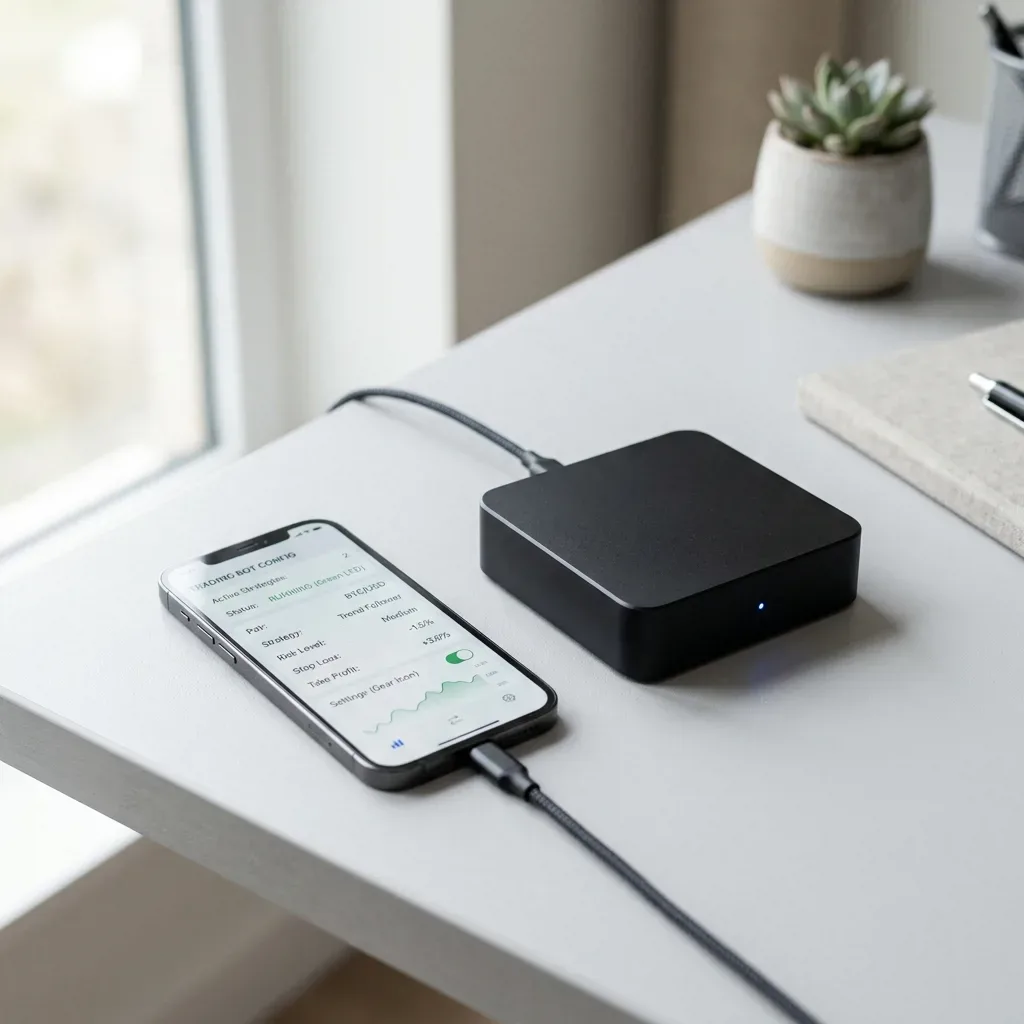
Almost everyone looking to unwind a minus searches for a tool first: a PNL calculator, a bot for MEXC futures, a script on the API. Those exist and some of them are genuinely useful for measuring the hole you are in.
What none of them supply is the part that actually decides the outcome — sizing against the depth of the drawdown and holding one scenario through a bad week. A separate page on this site covers the software question in detail.
What gets divided is the result of a cycle — not a deposit, not turnover. The terms are agreed in the chat before the start and are not reopened halfway through, which matters to both sides equally.
The arrangement works for one reason: with no result there is nothing to split, so there is no incentive to take on accounts whose numbers clearly do not add up.
A package is costed per account rather than as one lump. One account has a shallow loss and closes fast, another is deep and needs a long cycle. Merging them into a single flow ruins the numbers on both.
So a package gets a launch queue from the start: what runs first, what waits. The summary still arrives as one document.
We do not promise a fixed return and we do not quote timeframes before seeing the account. Anyone naming an exact figure without looking at the PNL history is guessing.
We also do not work with accounts of unclear origin. The account has to be yours or your client’s, with a clean history, or the conversation does not start.